
The Silver Eggplant: Inside the Factory That Harvests Happiness
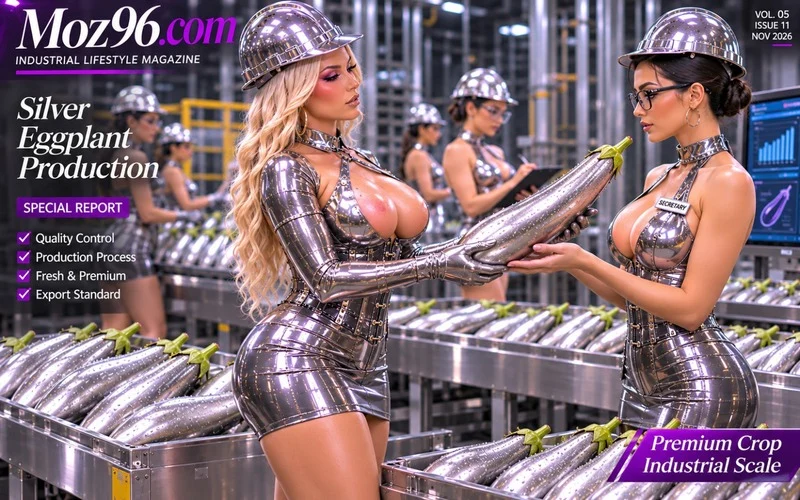
At 04:40, before the first conveyor belt began to move, the Silver House was already awake. Its stainless-steel corridors reflected violet warning lights, its glass walls held the faint blue of the morning shift, and somewhere beyond the packing floor a bell rang three times. The workers called it the harvest bell. The management called it the start of another impossible day.
The facility produced only one crop: the silver eggplant. It was long, smooth and almost mirror-bright, with a fresh green crown and tiny beads of water resting on its metallic skin. No ordinary greenhouse could grow it. No conventional seed catalogue listed it. In the world of this story, the fruit appeared only in a sealed agricultural valley where mineral-rich mist rolled over the soil each night.
Its legend was even stranger than its appearance. People said a silver eggplant could soften a woman's sadness and bring a lasting sense of joy when longing became difficult to quiet. The factory never described that story as science. It appeared in old harvest songs, handwritten notes and the private folklore of the women who worked the night shift. In the Silver House, the fruit was a symbol of emotional renewal—not a medicine, prescription or promise about real life.
A rare crop with a demanding production line
Director Elara Vale walked onto the inspection floor wearing a sculpted chrome work jacket, matching silver trousers and a polished hard hat. Her look had become part of the facility's visual identity: metallic tailoring, clean seams, reflective panels and practical gloves. The uniform was designed for the story's futuristic setting, but its details borrowed from real industrial design—high-visibility surfaces, secured fastenings, protective eyewear and clear identification badges.
Her secretary, Mara, waited beside the quality-control station with a tablet. Behind them, rows of silver fruit moved slowly through a temperature-controlled room. The line was divided into four stages: gentle washing, surface inspection, size grading and protective packing. Every eggplant travelled in an individual padded channel so that its delicate reflective skin would not be scratched by the metal rails.
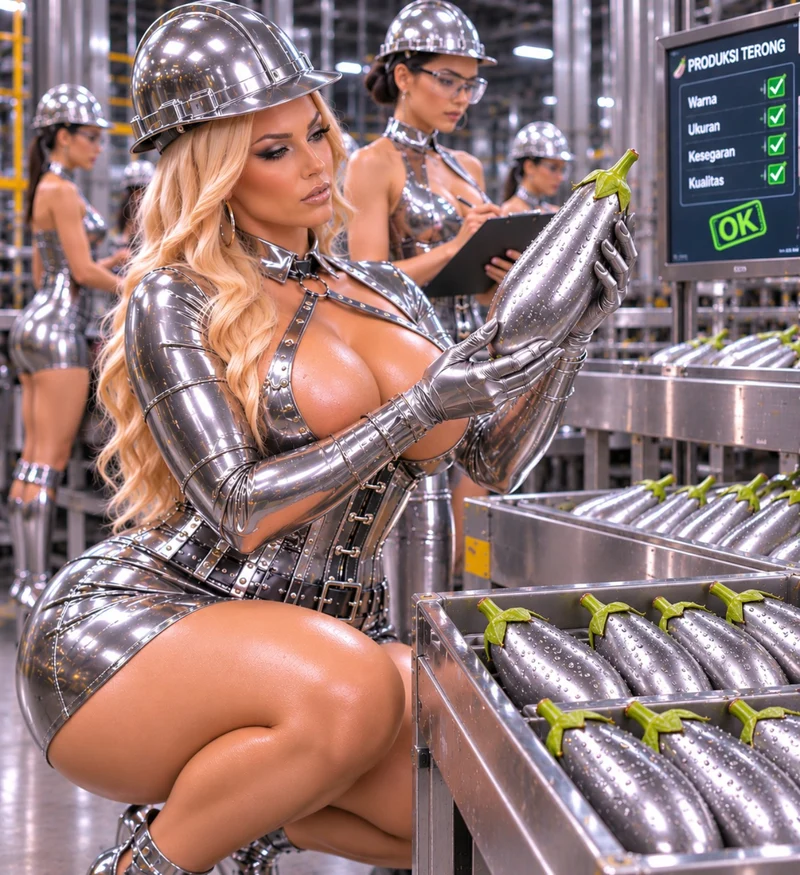
“Look at the crown first,” Elara told Mara, placing a long specimen in her gloved hands. “A bright surface means nothing if the stem is tired.” Mara turned the fruit beneath the inspection lamp. The green crown was firm, the skin unbroken, and the droplets clinging to its surface looked like tiny glass beads.
The factory's fictional grading card recorded five visible qualities: colour consistency, length, firmness, skin integrity and freshness. The rarest fruit earned the designation Silver Reserve. It was not the largest specimen that received the highest grade, but the one with the most even metallic finish and the least surface damage.
Inside the Silver House
The production hall was built like a clean-room greenhouse crossed with a precision workshop. Raised yellow walkways separated visitors from moving equipment. Transparent screens protected the sorting stations, while chilled air kept the fruit firm during inspection. A digital board showed the day's fictional harvest count, rejected-fruit percentage and packing temperature.
Elara's team included agronomists, line technicians, quality inspectors and logistics coordinators. Their silver uniforms were visually consistent, but their responsibilities were not interchangeable. The agronomist monitored the growing environment; technicians checked the conveyor and sensors; inspectors examined individual fruit; and the logistics team tracked sealed crates from the packing room to cold storage.

For the workers, the most important rule was simple: never rush a rare crop. A bruised silver eggplant could lose its visual grade before it reached the packing table. The line therefore slowed automatically whenever a sensor detected an unusual vibration. The supervisor reviewed the alert, isolated the affected tray and allowed the team to inspect it by hand.
That attention to detail gave the facility a rhythm of its own. Machines hummed, tablets chimed and the soft click of inspection tools moved from station to station. The silver fruit passed through the hall like a procession of small mirrors, each one reflecting a different fragment of the factory lights.
The briefing before the evening harvest
At the centre of the plant, Elara gathered the crew for a short briefing. She stood beside a large production display and pointed to the sections that needed attention: the washing nozzles, the padded transfer belt and the final freshness check. Mara recorded each assignment while the shift leaders confirmed their stations.
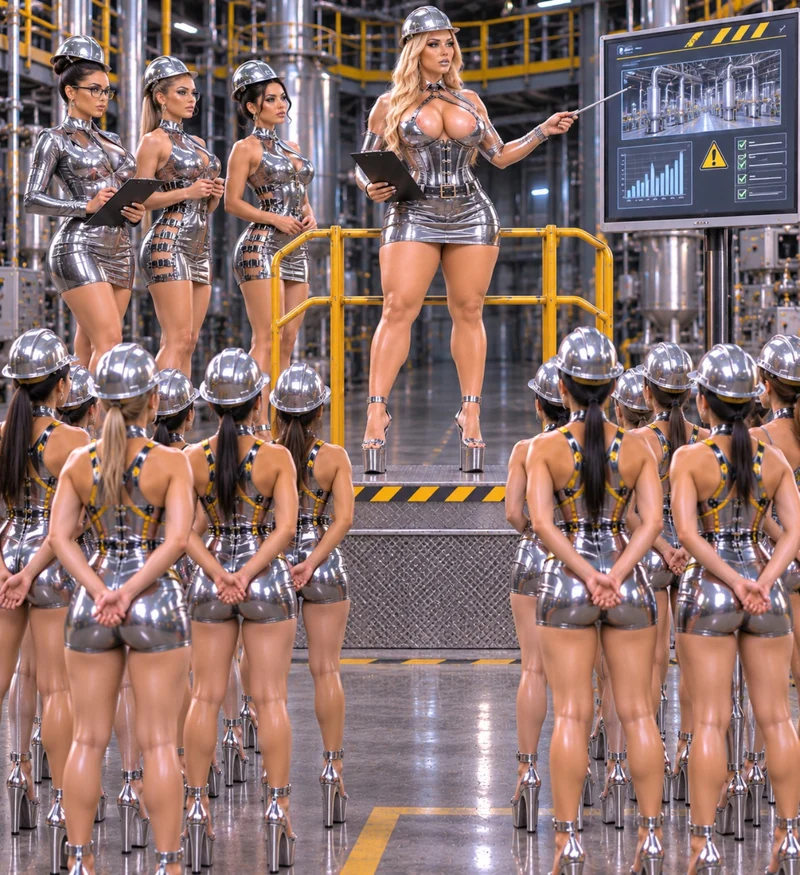
“We are not chasing volume today,” Elara said. “We are protecting the quality of a crop that cannot simply be replaced tomorrow.” The team nodded. The rare valley produced only a limited harvest, and every damaged crate meant fewer fruit for the winter exhibition.
After the briefing, Mara checked the packing schedule and asked whether the reserve fruit could be presented to the visiting buyers. Elara selected one long specimen from the inspection tray. Its silver surface caught the overhead lights, and for a moment it looked less like a vegetable than a polished object from another planet.
The legend behind the fruit
The story of the silver eggplant had travelled far beyond the valley. In the old version, a woman who had carried disappointment for years received one fruit from a stranger at the edge of a winter market. She did not eat it immediately. She placed it beside a window, watched the moonlight move across its skin, and remembered that happiness could return in small, unexpected forms.
Later versions gave the fruit a more magical reputation. They claimed that its fragrance could lift sadness and turn intense longing into calm, bright anticipation. In the Silver House, workers enjoyed telling the tale during breaks, but the facility's scientific department kept the boundary clear: the silver eggplant's emotional powers belonged to folklore and fiction. Real produce can be nutritious and pleasurable to eat, but no vegetable is proven to guarantee happiness or treat sadness.
Elara understood why the legend mattered. The women on her team had different histories, ambitions and private struggles. The fruit did not erase those experiences. It gave them a shared symbol: something rare could still grow after a difficult season, and beauty did not need to be loud to be noticed.
A small ritual at the end of the shift
When the last crate entered cold storage, Mara brought the reserve specimen back to Elara. The two women stood by the broad factory window, where the city lights began to appear beyond the glass. The eggplant rested between them, long and bright, its surface dotted with fresh water from the final quality check.
“Do you believe the story?” Mara asked.
Elara looked at the fruit, then at the workers leaving the hall in pairs. “I believe people need something beautiful to look forward to,” she answered. “The magic is the part we choose to make together.”
They placed the fruit in a clear display case for the next day's visitors. No one called it a cure. No one promised that longing would disappear. Yet the silver eggplant had done something important inside the Silver House: it had turned a difficult crop into a shared purpose, and an ordinary shift into a story the workers wanted to remember.
The look of a silver harvest
The factory's visual language followed the fruit. Chrome surfaces, cool violet highlights and clean industrial lines shaped the setting, while the staff uniforms used reflective silver as a dramatic editorial motif. The result sat somewhere between futuristic workwear and a high-fashion production campaign.
For a real-world styling interpretation, the strongest elements are easy to separate from the fantasy: a structured metallic jacket, a simple base layer, polished accessories and one statement piece. In an actual workplace, protective equipment must take priority over fashion styling. Safety footwear, suitable gloves, eye protection and properly certified helmets matter more than a dramatic silhouette.
At sunrise, the next harvest would begin. The line would be cleaned, the sensors calibrated and the inspection lamps tested again. Somewhere in the rare valley, another silver fruit would be growing—quietly, slowly, and without making any promises except to shine when the light reached it.

About MOZ96

No comments
We’d love to hear your thoughts! Share your opinion, experience, or questions in the comments below and join the conversation with other readers. Your feedback not only helps us improve future articles, but it may also help someone else who is looking for the same information.