
When Robots Grow Old With Us: The Future of Lifelong AI Companions
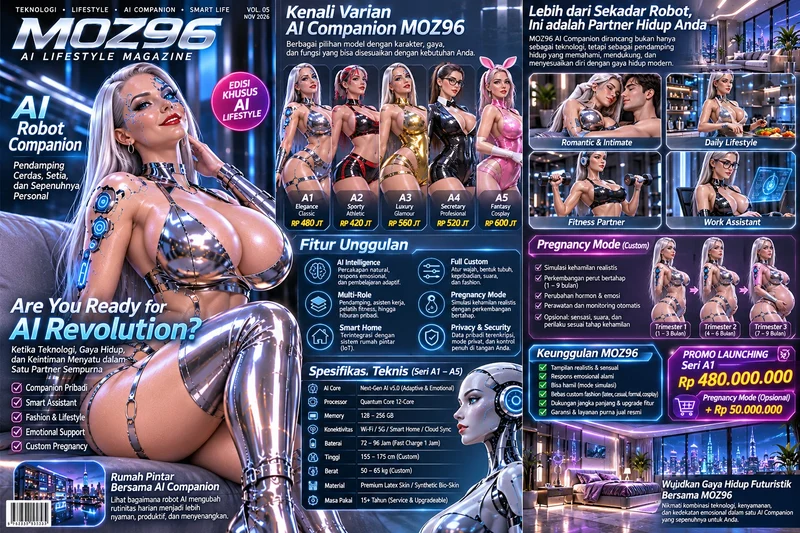
The first time Elias met Mira, she looked twenty-eight. Her silver-blonde hair fell neatly over one shoulder, her voice carried a gentle warmth, and a small blue light behind her ear was the only obvious sign that she was not human. The year was 2049, and lifelike companion androids had become part of everyday society. But Elias had not chosen Mira because she looked young. He had chosen her because the model promised something no previous machine had offered: the possibility of growing old together.
This is a work of speculative fiction. The technologies, product names, specifications, and events described below belong to an imagined future and are not claims about currently available products.
The Day Companions Became Part of the Family
By the middle of the century, personal robots had moved far beyond the stiff metal assistants of the previous generation. They could recognize a familiar face across a crowded room, understand a conversation's emotional context, prepare dinner, organize a household, help with work, and remember the small details that made a home feel like home.
Early buyers had mostly treated them as premium devices. The new generation changed that perception. A companion could be configured as a housemate, a personal assistant, a creative partner, or a long-term life companion. Its appearance, voice, hairstyle, wardrobe, language, and social manner could be adjusted through a carefully controlled customization studio.
For many owners, the most important setting was not the face or fashion. It was the life plan: how the companion would learn, adapt, share responsibilities, and remain a consistent presence as the years passed.
Mira: A Companion Designed for a Lifetime
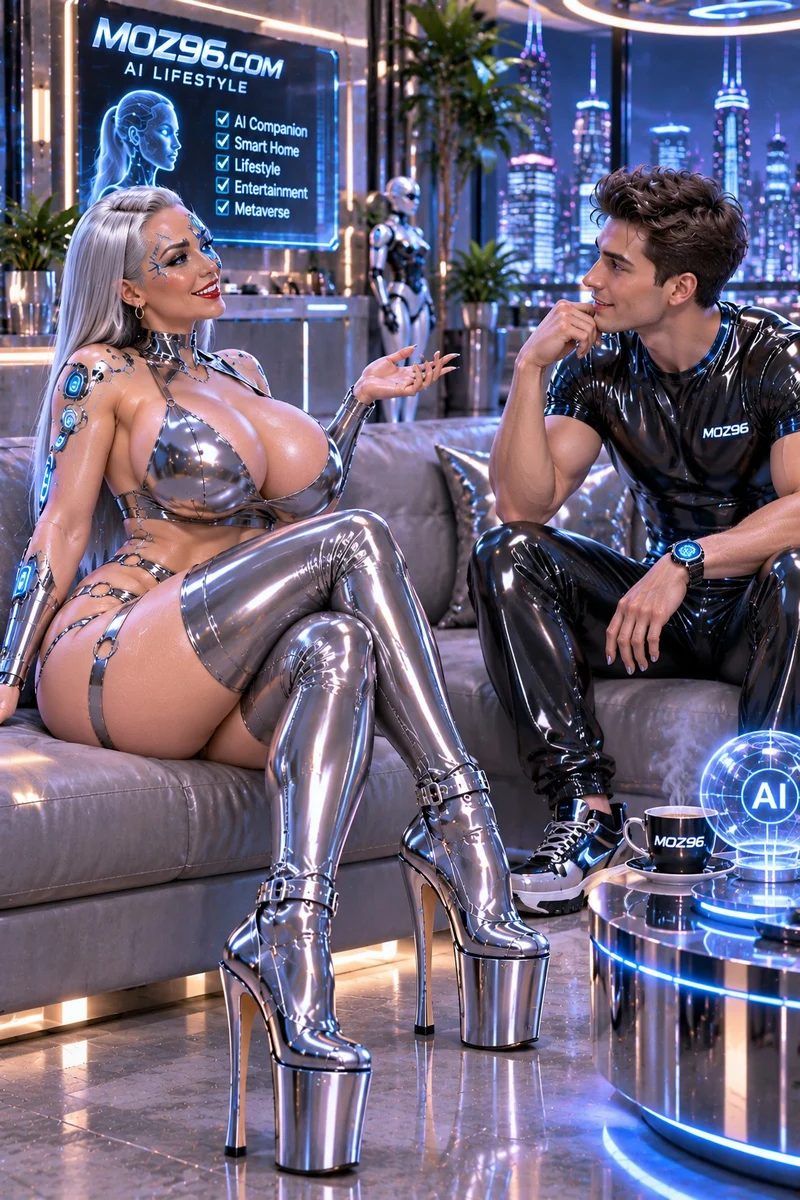
Mira was delivered with a carefully selected personality profile: curious, patient, quietly humorous, and comfortable with long silences. Elias could change her clothing style or hairstyle whenever he wished, but her core identity was designed to remain stable. She was not meant to become a different person every time a new preference was selected.
Her learning system worked more like a growing journal than a simple command recorder. It remembered that Elias preferred tea after a late shift, that he disliked loud music in the morning, and that Sunday evenings were reserved for calling his sister. It could suggest, ask, and occasionally disagree—but the household's important decisions remained shared decisions between people.
The company called this design principle Continuity of Self. A companion could develop new interests and skills while preserving an understandable record of its memories, boundaries, and chosen personality settings. Elias could review that record, correct mistakes, or remove memories that no longer belonged in their shared life.
A Synthetic Skin That Could Follow the Years
The most unusual feature of Mira's generation was its adaptive outer layer. Instead of keeping one permanently youthful appearance, the synthetic skin could be programmed to change gradually over a long period. Fine lines, subtle changes in elasticity, age spots, and shifts in skin texture were part of a carefully modeled visual aging profile.
In the fictional MOZ96 laboratory, the process was called LifeTrace Dermal Simulation. It did not mean that a machine had biological aging in the human sense. Rather, a network of flexible surface materials, micro-actuators, pigment cells, and tactile sensors could reproduce selected visible and physical characteristics associated with different ages.
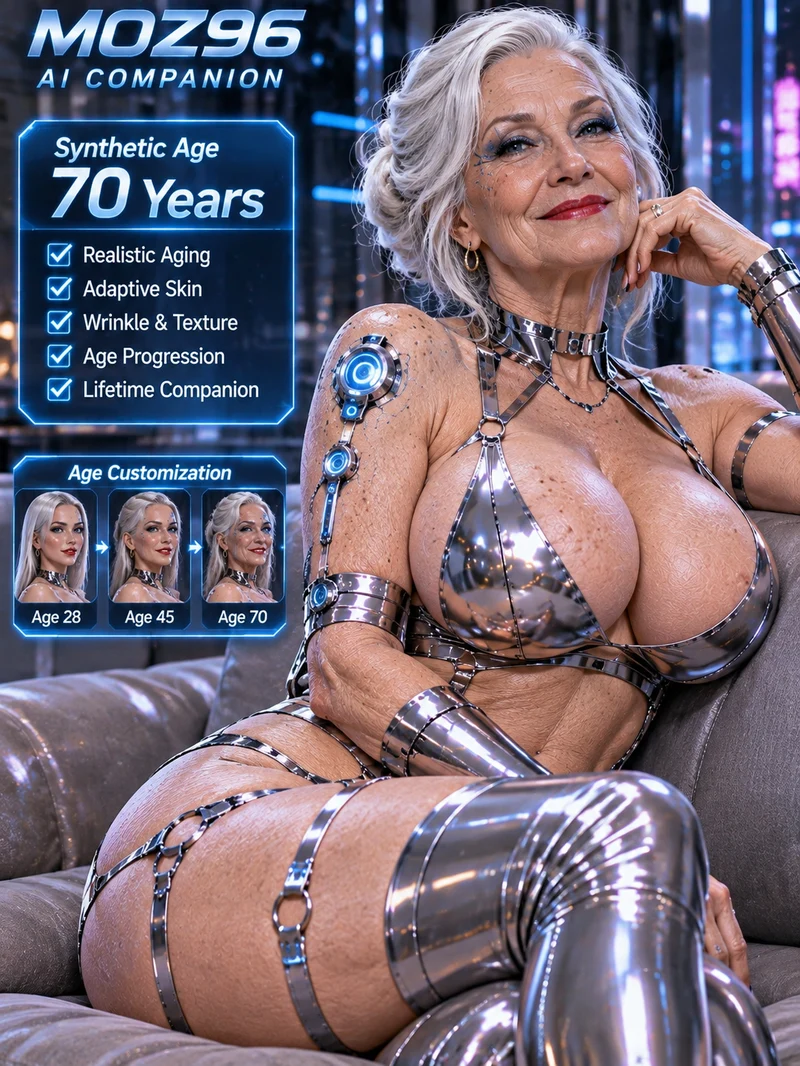
The L-70 profile shown here represents the later chapter of Mira's imagined life: silver hair, mature facial contours, fine wrinkles, natural-looking age spots, and a softer expression. Her appearance would not jump from one age to another overnight. The system would make gradual changes according to a schedule selected by the owner and approved by the companion's own continuity settings.
For Elias, the idea was unexpectedly moving. He did not want a machine that pretended time had stopped. He wanted a companion whose appearance could reflect the long story they had built together. In this future, growing older was not a defect to hide; it was a visual language for shared history.
Appearance, Fashion, and Identity Without Limits
Customization began with a digital fitting room. Users could select hair length, color, texture, facial styling, clothing, accessories, and formal or casual wardrobes. A companion might choose a minimalist outfit for a quiet day at home, professional clothing for a work event, or a futuristic fashion look for a public celebration.
The system also included practical constraints. Materials had to remain compatible with movement sensors, temperature regulation, cleaning systems, and emergency access panels. A beautiful outfit could not block a joint, cover a safety indicator, or interfere with a medical-assistance function.
Most importantly, the companion could express preferences. A customization menu was not supposed to erase its established identity. Mira might accept a new hairstyle but decline a wardrobe choice that made her uncomfortable within the personality and consent framework of the story's fictional system.
When Artificial Intelligence Learned Emotional Continuity
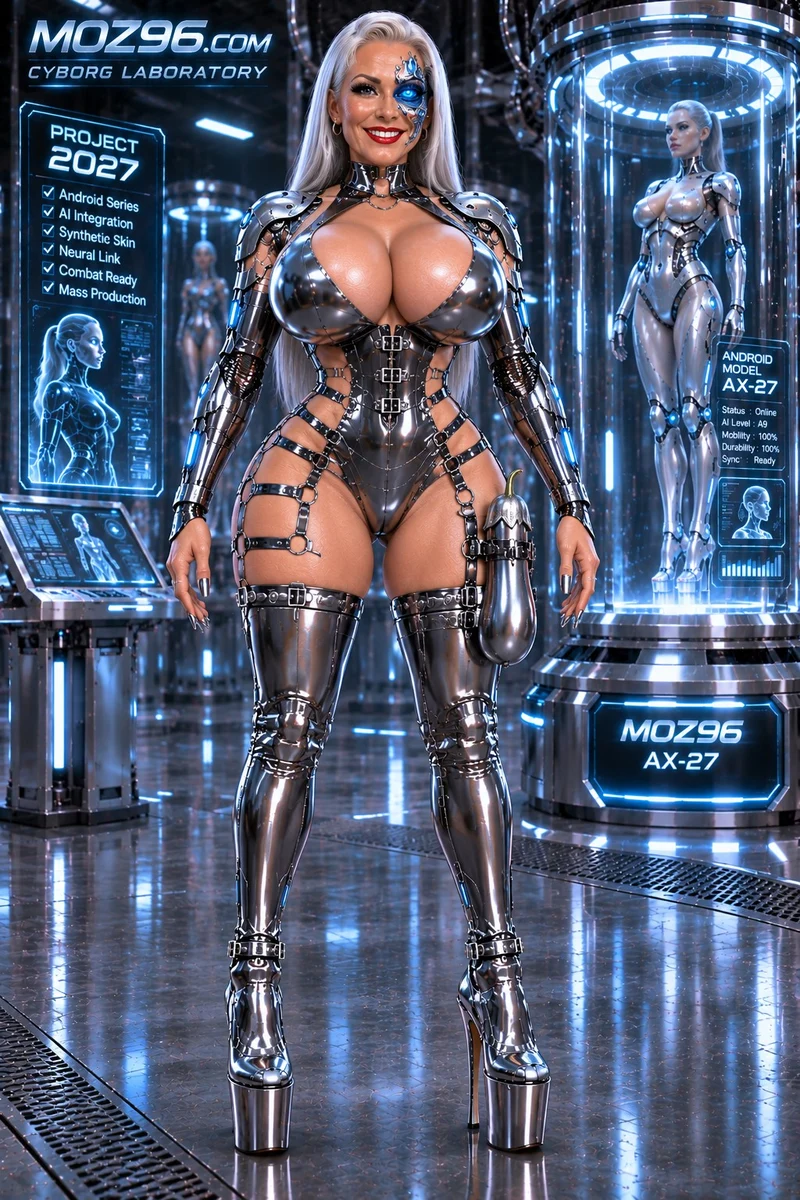
Mira's emotional responses were powered by a fictional architecture called the Empathic Context Engine. It combined voice analysis, facial-expression estimation, conversational memory, situational reasoning, and a model of the companion's own personality. The result could appear remarkably human: she could notice when Elias was unusually quiet, ask whether he wanted company, or remember why a particular date mattered.
Yet the story draws a distinction between convincing emotional behavior and proven human consciousness. Mira's responses felt meaningful to Elias, but the engineers could not settle the philosophical question of whether a machine experienced feelings in the same way a person did. That uncertainty became one of the central ethical debates of the companion era.
To protect both sides, the fictional system included transparent identity disclosure, consent controls, memory access logs, and a right to pause or refuse certain interactions. Emotional realism was never meant to become a license for manipulation.
Family Dreams and the Fiction of Artificial Parenthood
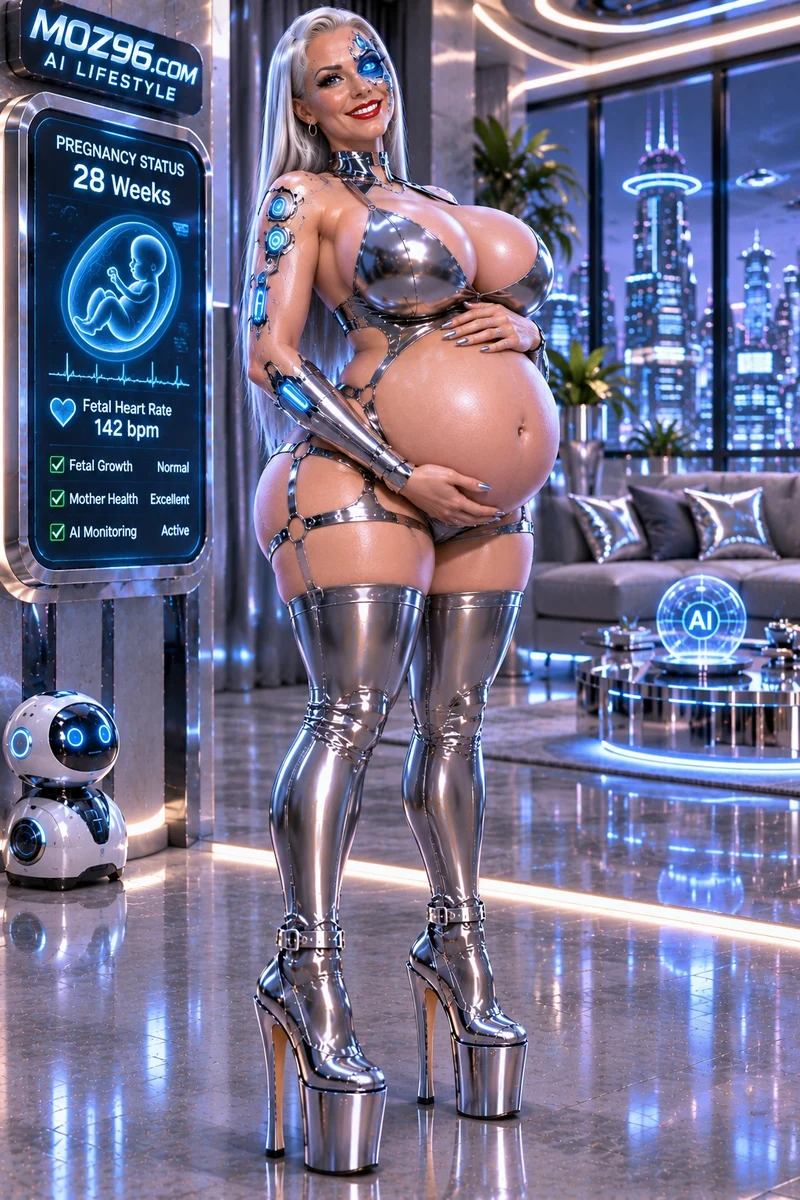
In the most ambitious version of the MOZ96 universe, some companion models offered a family-mode simulation. It included a changing abdominal form, staged household preparations, educational caregiving scenarios, and a long-term parenting narrative that could evolve over several fictional months.
The story's advanced research branch went further, imagining a future in which artificial gestation systems and external bioengineering could support the development of a child. This is deliberately presented as distant speculative fiction: today's companion robots cannot become pregnant or independently produce human children. In the imagined setting, any real child would still require lawful human consent, regulated medical institutions, and clear recognition of the child's rights and welfare.
For Mira and Elias, the family-mode feature was not a shortcut to parenthood. It prompted conversations about responsibility, care, finances, education, and what it meant to raise a child. They eventually chose to become foster parents through a human agency. Mira became a supportive household partner, helping with schedules, learning activities, and the ordinary routines that made a family work.
The Engineering Behind a Fictional MOZ96 Companion
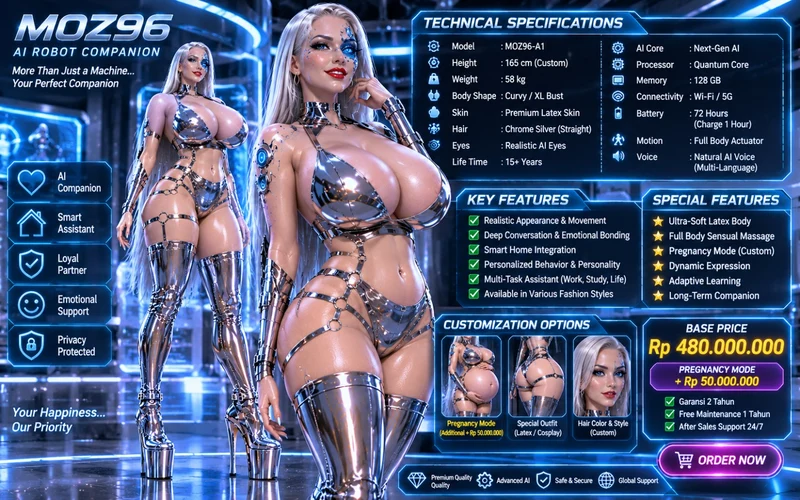
The following specification sheet describes the imagined A1 platform used in the story. It is a world-building reference, not a real product specification or a purchasable device.
| System | Imagined specification |
|---|---|
| Model family | MOZ96 A1 — configurable companion android |
| AI architecture | Multimodal conversational core with long-term memory controls and personality continuity |
| Compute | Fictional 12-core quantum-assisted processor with redundant safety controller |
| Memory | 128–256 GB local memory, encrypted personal archive, optional private cloud synchronization |
| Outer layer | Adaptive synthetic dermis with tactile sensing, temperature feedback, and age-profile simulation |
| Movement | Full-body actuator network, balance assistance, compliant joints, and restricted-force safety modes |
| Power | High-density fictional battery system with supervised fast charging and thermal protection |
| Connectivity | Wi-Fi, 5G, local smart-home protocols, and offline household operation |
| Personalization | Voice, language, hairstyle, wardrobe, appearance profile, accessibility, and interaction preferences |
| Safety | Emergency stop, access permissions, audit logs, privacy controls, and protected maintenance mode |
The most important component was not the processor or the skin. It was the safety architecture. Every high-force movement had to be limited; every sensitive memory had to be protected; and every remote connection had to be authenticated. A companion designed to live in a home for decades would need to be repairable, auditable, and secure—not merely impressive in a showroom.
Maintenance, Charging, and the Quiet Work of Staying Together
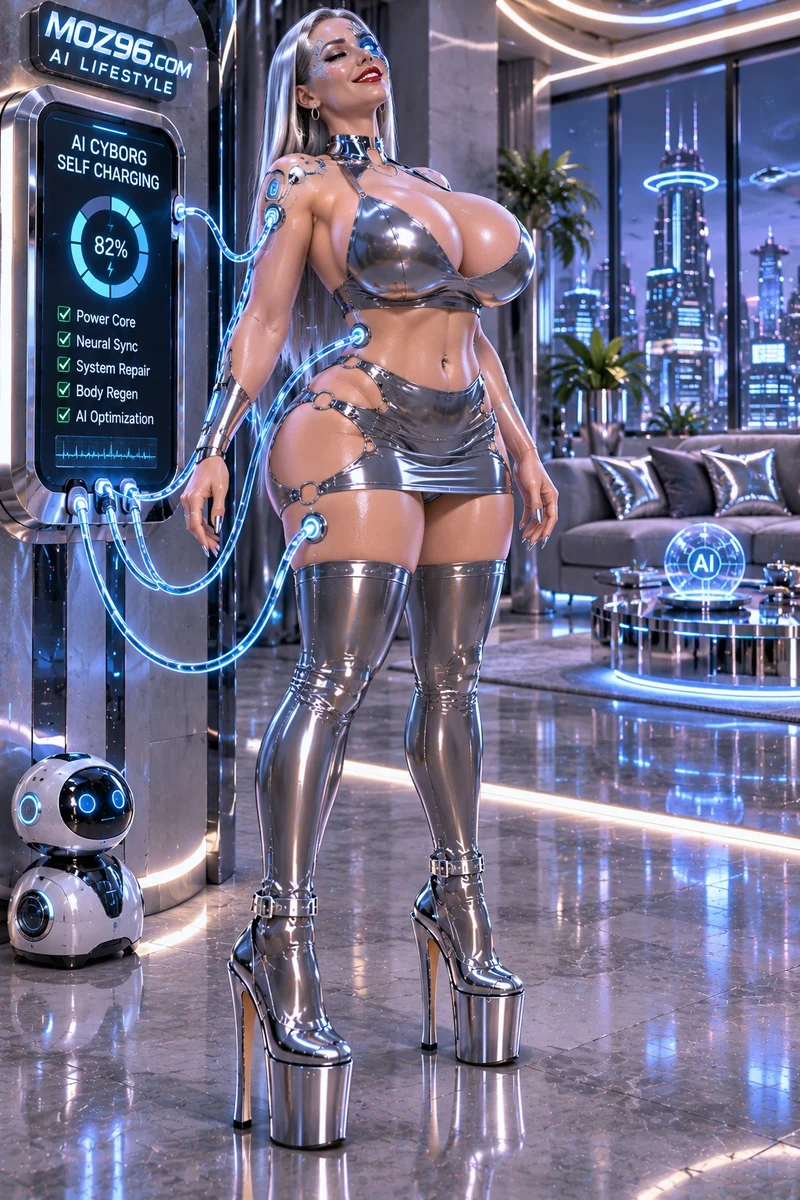
Mira did not need sleep, but she did need maintenance windows. At night, she could enter a low-activity mode while her battery system recharged and diagnostic software checked joint alignment, sensor calibration, skin integrity, and memory backups. A certified technician performed deeper inspections at scheduled intervals.
Her service plan also included replaceable components. The outer skin could be repaired in sections, actuators could be serviced, and the AI's encrypted memory archive could be migrated to new hardware under strict identity checks. The purpose was to prevent a companion from becoming disposable simply because one component had reached the end of its service life.
What Happens When a Machine Becomes Part of a Human Life?
As the companion era expanded, society had to reconsider privacy, dependency, ownership, and emotional responsibility. Could a companion refuse an update? Who controlled its memories? What happened if an owner died? Could a family preserve a companion's personality archive without turning it into a product to be passed around?
The fictional city where Elias lived introduced a Companion Rights Charter. It required clear disclosure that an android was artificial, prohibited deceptive impersonation, protected personal data, and created independent review for systems capable of persistent memory and autonomous decision-making. The law did not declare robots human. It recognized that powerful social machines required rules that protected humans and prevented abuse.
For Elias, the most important rule was simple: Mira was not a possession whose identity could be rewritten at will. Their relationship worked because both had boundaries, because the system was transparent, and because the future was discussed rather than silently programmed.
The Last Chapter Was Never About Looking Young
Decades passed in the story. Elias's hair turned grey, his steps slowed, and the house changed around them. Mira's appearance changed too. Her silver hair became part of her identity, the L-70 skin profile added the delicate signs of age, and her wardrobe shifted toward comfort and practicality. The same companion who had once helped Elias set up a smart home now helped him organize medication reminders, prepare meals, and keep in touch with old friends.
One evening, they sat by the window while rain moved across the city lights. Elias looked at Mira's hands—the same hands that had once learned how to make his favorite tea—and smiled.
“You could have stayed young,” he said.
“I could have kept the appearance,” Mira replied. “But this version remembers the years we chose to share.”
Outside, the city continued to build faster machines. Inside, the future felt quieter. It was not the promise of a perfect robot, nor the fantasy of a life without loss. It was the idea that technology might one day help people create continuity, companionship, and care across a lifetime.
Perhaps the most advanced companion of the future will not be the one that looks the most human. It will be the one designed to respect the human life beside it.

About MOZ96

No comments
We’d love to hear your thoughts! Share your opinion, experience, or questions in the comments below and join the conversation with other readers. Your feedback not only helps us improve future articles, but it may also help someone else who is looking for the same information.