
Beyond Sweet: How to Wear Gourmand Perfumes

Gourmand perfume has a reputation for smelling delicious, but the best examples are more interesting than a simple sugar rush. Think of the warmth of vanilla, the soft nuttiness of pistachio, the golden richness of honey or the airy comfort of marshmallow. These notes can feel creamy, toasted, powdery, woody or softly floral depending on what surrounds them. That is the secret to wearing a sweet fragrance with personality: look for contrast, texture and balance.
A gourmand scent can be cosy without feeling heavy, playful without being childish, and noticeable without filling every room. The right choice depends on the notes you enjoy, the atmosphere you want to create and how the perfume develops on your own skin.
What makes a perfume gourmand?
In perfumery, gourmand describes compositions that suggest edible ingredients or familiar food aromas. Vanilla, caramel, cocoa, coffee, nuts, milk, honey and candied fruit are common references. A perfume does not need to smell exactly like a dessert to belong to this family; perfumers often use these materials as an impression, then combine them with woods, flowers, spices, citrus or musk.
That supporting structure makes a major difference. Vanilla with woods can feel smooth and elegant; vanilla with citrus may feel brighter. Pistachio with cardamom can suggest a toasted, lightly spiced cream, while honey paired with florals may feel golden and luminous. The note name is only the opening clue—the full formula decides the personality.
Vanilla: warm, soft and endlessly adaptable
Vanilla is one of the most versatile gourmand notes. In a fragrance it can be creamy, powdery, resinous, smoky or almost woody. A light vanilla-musk blend often wears close to the skin and works well for everyday settings. A deeper vanilla with amber, tonka or woods creates a richer evening impression.
When shopping, read beyond the word vanilla. Look for supporting notes such as sandalwood, musk, amber, bergamot, cacao or spice. These clues help you predict whether the result is airy and clean, warm and cosy, or dense and dessert-like. On a tester strip, vanilla may seem simple at first; give it time to settle before deciding.
Pistachio: creamy nuttiness with a modern edge
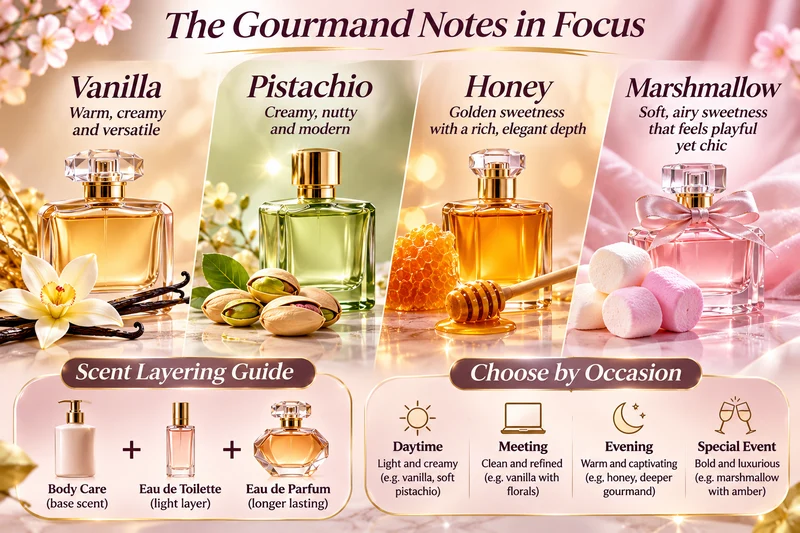
Pistachio has become a recognisable gourmand direction because it can suggest both creaminess and a slightly green, nutty character. It is not always sugary. In some compositions, roasted nuts, cardamom, almond or woods make the note feel textured and sophisticated; in others, whipped cream, rum or marshmallow create a more playful dessert effect.
For a balanced pistachio scent, look for contrast. Citrus can brighten the opening, cardamom can add gentle spice, and sandalwood or musk can soften the dry-down. If you love nutty fragrances but dislike very sweet perfumes, choose a formula where pistachio is paired with green, woody or aromatic notes rather than a large sugary accord.
Honey: golden warmth and floral depth
Honey can smell syrupy, waxy, floral or softly animalic depending on the materials around it. It often brings a rounded warmth that makes a fragrance feel rich and enveloping. Paired with orange blossom, jasmine or rose, honey can feel luminous and romantic. Combined with tobacco, amber or woods, it becomes darker and more resinous.
Honey is a good direction for someone who wants a sweet impression but does not necessarily want a candy-like scent. Try it on skin and notice whether the dry-down becomes powdery, woody or more floral. Those details matter more than the word honey on the label.
Marshmallow: airy sweetness and soft comfort
Marshmallow accords are usually built to suggest fluffy sugar, vanilla cream or a soft powdery sweetness. They can create a gentle, comforting aura, especially when paired with musk, white florals or creamy woods. In a more playful composition, marshmallow may sit beside fruit, cotton candy or whipped cream.
Because this style can become very sweet, balance is useful. Musk can make it feel cleaner, citrus can add lift, and woods can give the base more depth. If you enjoy a soft skin-scent effect, look for marshmallow in a restrained composition rather than a perfume dominated by candy notes.
How to choose the right gourmand profile
- For an easy everyday scent: try soft vanilla with musk, light woods or citrus. It gives warmth without necessarily becoming dense.
- For a creamy, modern signature: explore pistachio with cardamom, almond or sandalwood. This combination gives sweetness a nutty edge.
- For a warm floral mood: look at honey with orange blossom, jasmine or rose. The floral notes can keep the sweetness from feeling flat.
- For a cosy, soft impression: choose marshmallow with musk, vanilla or cashmere-like woods.
- For a richer evening profile: consider vanilla, caramel or honey with amber, coffee, cacao or warm spice.
Scent layering: build contrast rather than adding more sugar
Layering can make a fragrance feel more personal, but two very sweet perfumes do not automatically make a better combination. Start with one scent that acts as the base, then add a second fragrance that contributes a different texture. For example, a light vanilla can soften a dry woody scent; a fresh citrus can brighten a creamy pistachio perfume; and a clean musk can make marshmallow feel less sugary.
Try the combination on a small area first. Spray the stronger fragrance lightly, allow it to settle, then add one spray of the softer fragrance. Test the pairing for several hours because the opening can be misleading. If the result becomes too dense, reduce the number of sprays or use the second scent only on clothing where appropriate for the fabric.
Where and when to wear gourmand perfume
There is no strict season for gourmand fragrance. A light vanilla-musk or citrus-pistachio blend can work in warm weather, especially with a modest application. Richer caramel, honey, coffee and amber compositions may feel especially comforting in cool weather or evening settings. The venue matters too: a close-fitting skin scent may suit an office better than a dense, high-projection perfume.
For daytime, begin with one or two sprays and see how the fragrance behaves in the heat. For dinner or an evening event, a warmer composition can feel more expressive, but it is still worth considering the space and people around you. A memorable fragrance does not need to be overpowering.
How to test a gourmand fragrance before buying
First, spray it on a test strip and note the opening. Then try it on skin if you like the direction. Give it at least an hour to develop, and revisit it later in the day. Pay attention to the dry-down: does the vanilla remain creamy, does the pistachio become woody, does the honey turn floral, or does the marshmallow become powdery?
Try not to test too many strong scents at once. Compare two or three options, take a break, and avoid making a decision based only on the first few minutes. If possible, sample a travel size before investing in a full bottle. Fragrance performance varies with skin, climate, application and formula, so no single wear-time promise applies to everyone.
Make sweetness feel like your signature
The most appealing gourmand perfumes are not simply the sweetest ones. They are the ones where edible notes meet contrast: vanilla with woods, pistachio with spice, honey with florals, or marshmallow with clean musk. Start with the profile that makes you curious, notice how it changes through the day, and choose the version that feels natural in your routine.
Sweet can be airy, elegant, toasted, creamy or quietly sensual. Once you recognise the difference between those textures, gourmand fragrance becomes less about smelling like dessert and more about finding a scent that feels distinctly yours.
For another fragrance-focused read, explore our guide to hair perfume and fragrance styling.
Further reading: Spate’s fragrance trends report, Allure on grown-up gourmands and Marie Claire’s pistachio fragrance edit.

About MOZ96

No comments
We’d love to hear your thoughts! Share your opinion, experience, or questions in the comments below and join the conversation with other readers. Your feedback not only helps us improve future articles, but it may also help someone else who is looking for the same information.